

Process costing is a method process costing used to track production costs in industries that manufacture large volumes of identical products. It ensures accurate cost allocation, helping businesses improve pricing, efficiency, and profitability. Applying job order costing and process costing effectively depends on understanding how each method works in business scenarios. Here’s how companies use these costing methods to manage their production processes efficiently.
What Are Some Effective Data Management Practices?
- Examples are – Tata Motors (cars and trucks), Sony (T.V. and Video monitors) Compaq (personal computers), Nokia (mobile phones), etc.
- These are the materials that directly contribute to the production of a product.
- Process costing is used for standardized or mass-produced items, with costs accumulated per production process or department.
- This statement shows element wise details of work done in terms of completed units only.
- These percentages are used to allocate the total input cost among the joint products.
Reconcile units input to the production process with the units output or in gross vs net process at the end of the period. Units which have been introduced in the process and completed during the same period have their own unit cost. This cost may not be the same as the completed unit cost of units of opening WIP. Here WIP moves on a first-in-first-out basis, i.e., unfinished work on opening WIP units is first completed before taking up work on any new units. Hence none of the opening WIP will find a place in the closing WIP. This is shown separately in the statement of equivalent production units.
Related Manufacturing Costing Content

In case of abnormal expense, it is a charge to the profit & loss account directly and not to any individual process. The per-unit calculation includes the costs for completed units and partly finished equivalents at the end of the period. Costs for unfinished goods are usually expressed as a percentage of the total cost, reflecting processing expenses incurred so far. The unit cost is calculated by dividing the total accumulated cost on the Job Cost Sheet by the number of units produced within that specific job or batch.
AccountingTools
The organization can identify such inventory by physically counting the units or through software inbuilt into the manufacturing process. In addition, the costs of inventory under each process are also identified at this change. Calculate the number of units produced, both completed units and the portion of partly completed units. These costs would be sent to the next department to calculate its processing costs and add them to the first department’s costs. And then the last department would calculate its processing costs to add to the combined costs from the first and second departments for the total process cost.
- Meat packing industry is an example of this type of process costing.
- By identifying high-cost areas within the production process, you can implement changes to reduce waste and streamline operations.
- However, job costing requires extensive record-keeping and documentation, increasing administrative costs and complexity.
- Organizations engaged in continuous, high-volume production of standardized products should typically implement process costing.
- As a result, our selling price will be much higher or under the market, it will impact to our profit.
- This approach gives a more precise picture of production costs during a specific timeframe, which is especially useful when tracking changes in costs incurred.
- Process costing, conversely, accumulates costs in a series of departmental Work-in-Process (WIP) accounts.
Units’ representing abnormal loss are valued like good units produced and the value of units representing abnormal loss is debited to a separate account which is known as abnormal loss account. It is not possible to trace the items of prime cost of a particular order, as its identity is lost in continuous production. The cost per unit can be ascertained at the end of any manufacturing process by dividing the total cost of a process by the number of units produced in that process. Process costing is used in mass production industries producing standard or identical products continuously through a series of processes or operations.
Both process costing and job costing have their respective advantages and applications based on the nature of the business and production processes involved. Businesses must choose the appropriate costing method that aligns with their manufacturing processes and enables accurate cost allocation, pricing decisions, and profitability analysis. Direct labor is accumulated by units throughout the production process, so it is more difficult to account for than direct materials. In this case, we estimate the average level of completion of all work-in-process units, and assign a standard direct labor cost based on that percentage. We also assign the full standard labor cost to all units that were begun and completed in the period.
Process costing is probably the most widely used method of cost ascertainment. Process costing refers to a method of accumulating cost of production by process. It is used in mass production industries producing standard products like steel, sugar, chemicals, oil, etc. In all such industries, goods produced are identical and all factory processes are standardised. Paper mills use process costing because paper is produced in large quantities, and the individual sheets are typically not distinguishable from each other.
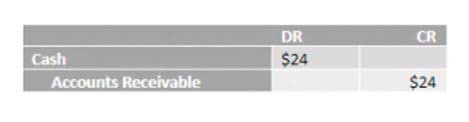
Allocate total costs to finished and unfinished goods
The department’s costs would be allocated based on the number of cases processed. For example, assume a not-for-profit pet adoption organization has an annual budget of $180,000 and typically matches 900 shelter animals with new owners each year. With processing, it is difficult to establish how much of each material, and exactly how much time is in each unit of finished product. This will require the use of the equivalent unit computation, and management selects the method (weighted average or FIFO) that best fits their information system.

When is process costing used?
- You probably do some consulting (i.e. labor and overhead) with the customer before sending the job to the printer.
- The primary disadvantage of process costing lies in its averaging nature, which may mask variations in actual production costs.
- Units representing abnormal gain are valued like normal output of the process.
- Thus, it would be appropriate for process costing to reflect 100% of the direct material cost being incurred at the beginning of the process.
Job order costing and process costing are the primary frameworks businesses use to determine the true cost of production for setting competitive market https://www.bookstime.com/ prices and meeting regulatory requirements. Since process costing determines the cost of each unit based on the overall costs of departments or stages in manufacturing, errors can creep in by including non-production costs when calculating. That could mean pricing items too high which can damage customer relationships and lower sales. These devices track utility consumption, such as gas, water, and electricity.
